This article reveals the operation mechanism and factors affecting the timeliness of cargo tracking updates in EU road freight, aiming to help readers establish a more comprehensive understanding of logistics.


We had a customer who sent a shipment from Germany to Spain via Less Than Truckload (LTL) last month, with a total distance of about 1800 kilometers. The transportation took 8 days and was finally delivered within the promised time limit. However, there was no update on the logistics tracking from the time the cargo was picked up until the day before delivery. Although it was not overdue, the customer was still very anxious and repeatedly checked the cargo status with the customer service every day.
Such situations are actually not uncommon in European trucking shipments, especially for transportation methods such as Less Than Truckload (LTL) or Groupage. After the cargo is loaded, if it does not reach the transfer station or the final destination, it will not be unloaded halfway, and the driver will not be able to scan the code to update the tracking. In fact, most freight vehicles in Europe are not equipped with real-time GPS tracking systems, resulting in "static" or "interrupted" tracking during transportation becoming the norm.
The longer the transportation distance, the longer such "information gaps" tend to be. In order to deliver the cargo as soon as possible, drivers usually drive continuously and do not stop at non-essential stops halfway, which also makes the tracking updates more sparse.
We recommend that when you ship the cargo, in addition to paying attention to the logistics tracking, you should give priority to the estimated delivery time we provide, and use it as a benchmark to plan and expect reasonably.
Ⅱ. How is Your Cargo Information Generated and Transmitted?
In the process of European road freight, the cargo tracking seems to be just simple steps such as "Picked Up", "In Transit", and "Signed For", but in fact, it is supported by an information collaboration network jointly supported by multiple technical systems.

A complete information update usually goes through the following links:
Driver Scanning: Scan the cargo when picking up, unloading or transferring
On-board Equipment Transmission: The scanned data is uploaded through the on-board terminal
Regional Transfer Station Receiving: The data is transmitted to the nearest station server via mobile network or Wi-Fi
Central Control Center Processing: The data is synchronized to the logistics company's central database and integrated into the transportation management system
Customer Query System Update: Finally, the latest cargo location and status are displayed on the client side
The whole process seems to be automated, but in fact, it relies on stable networks and data exchange between systems. Any delay in any link may lead to the lag of information update. Only by understanding the logic behind the technology can we better manage transportation expectations and maintain smooth and efficient logistics communication.

Ⅲ. Besides Distance, What Else is Delaying Your Cargo?
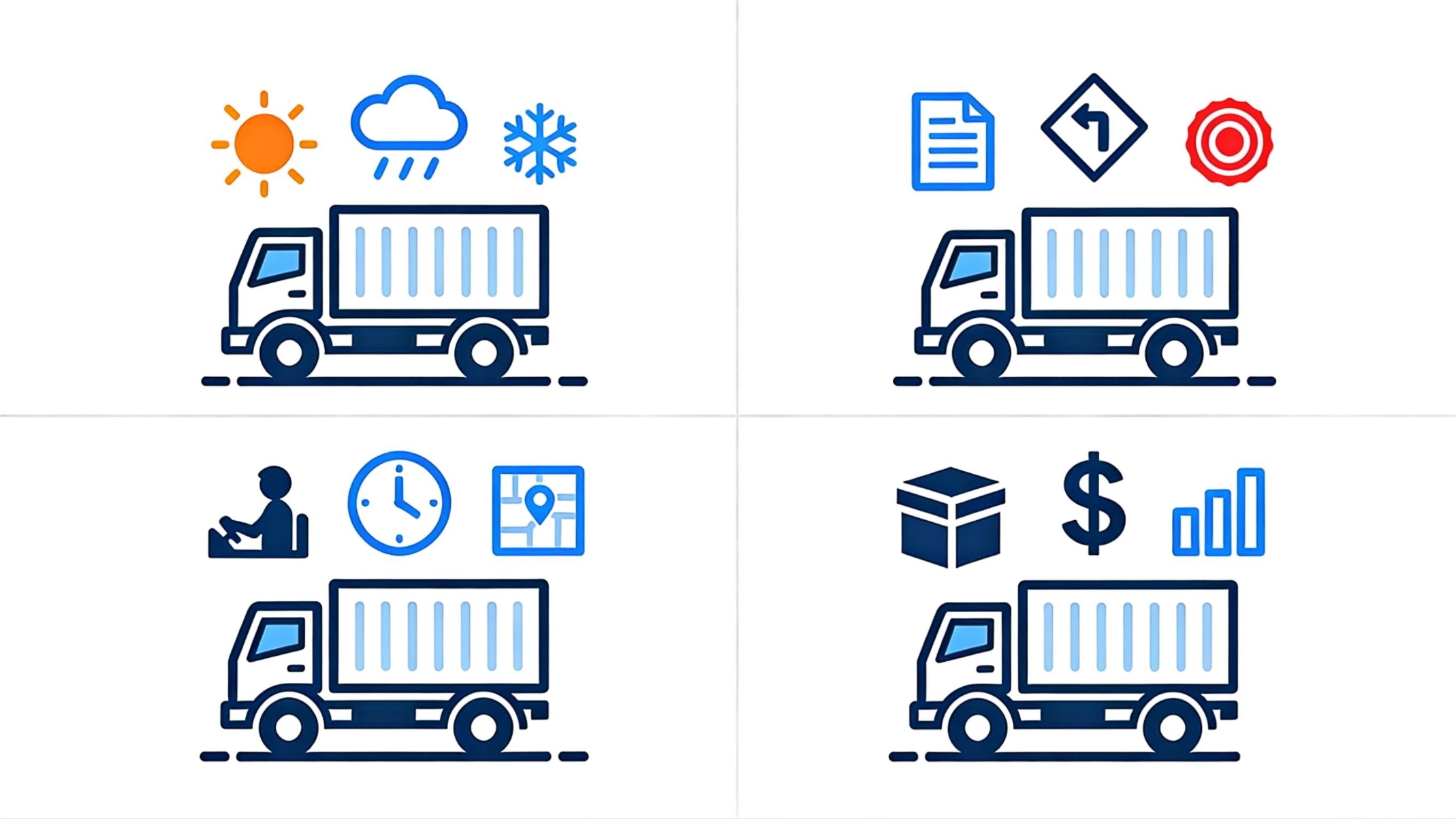
The transportation timeliness of cargo in Europe, in addition to being affected by distance, is often delayed by some imperceptible factors.
Seasons and Weather: Ice and snow in Northern Europe in winter and extreme heat in Southern Europe in summer will directly affect road safety and vehicle operation.
Policies and Regulations: Different holiday arrangements in various countries and the EU's strict driving time regulations may become "invisible breakpoints" in the transportation process.
Human Factors: Unexpected delays in border document inspections, drivers' route choices, and even sudden traffic accidents will make the journey full of variables.
Commercial Factors: The density of the logistics company's own transfer network and the efficiency of its local partners directly determine whether the cargo can be transferred efficiently.
A short period of static tracking does not necessarily mean that the transportation is stagnant; the achievement of the promised timeliness often depends on the control of countless details. Understanding these "inside stories" is not to eliminate all uncertainties, but to find a balance between trust and foresight - choose a reliable partner, pay attention to scientific timeliness, and view each shipment with a systematic perspective.