
In 2026, Chinese brands going global—particularly overseas warehouse enterprises—are standing at a historic turning point.
On one side lies saturation and intense competition in the U.S. market; on the other, the complex landscape of the European market.
On one side, escalating geopolitical risks; on the other, aggressive expansion by leading players.
More importantly, at the beginning of 2026:
· European national leaders have visited China in succession
· U.S. President Donald Trump is planning a visit to China in April
These diplomatic developments send a key signal: China–Europe and China–U.S. relations are undergoing a phase of adjustment.
This does not represent a long-term geopolitical shift, but for companies expanding into Europe and the United States, it marks an important policy window.
I. A Shifting Landscape: The Diverging Paths of the U.S. and European Markets
U.S. Market: From Incremental Growth to Fierce Competition Over Existing Share
Between 2024 and 2025, the aggressive expansion of Temu and Shein fundamentally reshaped the competitive landscape.

· Temu’s GMV in the United States surpassed USD 30 billion, representing a 250% year-on-year increase.
· Shein, through localized warehousing, reduced its average delivery time to 3–5 days.
· Amazon FBA fees have increased for three consecutive years, with a cumulative rise exceeding 30%.
This signals that competition in the U.S. market has evolved from “who can sell better” to “who has the stronger supply chain.” Your overseas warehouse is no longer merely a storage facility—it has become a critical component of your core competitiveness in cross-border expansion.
European Market: From Fragmentation to Supply Chain Integration
Europe and the United States represent entirely different games.

The United States operates as a unified market, with largely consistent language, legal systems, and currency.
By contrast, the European Union is a patchwork of 27 countries, where languages, legal frameworks, cultures, and consumer habits vary significantly from one market to another.
Three Major Trends in the European Market:
Trend One: Platform-Based Integration
The shift from fragmentation to platform integration is becoming inevitable.
Platforms such as teknihall (teknihall-trucking.com) are integrating last-mile trucking resources across Europe, providing companies expanding into the region with a unified final-mile delivery platform. This signals the end of an era characterized by opaque information and fragmented, independently operated fleets.
With European trucking increasingly operated through platform-based models, users can expect more stable delivery timelines, greater transparency, lower costs, and an improved overall service experience.
Trend Two: Cross-Border Collaborative Networks
The normalization of China–Europe freight train services and the upcoming launch of the Ice Silk Road are expected to significantly reduce transit times between China and Europe.
As a result, traditional segments—first-mile transportation, overseas warehousing, last-mile delivery, after-sales service, and reverse logistics—are becoming more integrated. Overseas warehouses are gradually evolving from isolated “islands” into strategic nodes within a broader logistics network.
Trend Three: Upgraded Localized and Differentiated Services
The market is shifting from “delivery-only” models to comprehensive service solutions.
Value-added services such as shelf placement, cash on delivery, returns and exchanges handling, and after-sales repairs are becoming increasingly important. Service differentiation in overseas warehousing is emerging as one of the key competitive factors.
Key Signal: A 2026 Policy Window
What does it mean when European and U.S. leaders visit China in succession?

First, the U.S. and European markets need China.
· Europe is under significant economic pressure: Germany’s GDP growth stands at just 0.3%, hovering near recession.
· The United States faces persistent inflationary pressure and requires Chinese goods to help ease inflation.
· In terms of supply chain resilience, China’s manufacturing and logistics ecosystem cannot be replaced in the short term.
Second, this is a phase of adjustment, not a long-term geopolitical shift.
· Former U.S. President Donald Trump’s planned visit to China is aimed at addressing domestic challenges, including debt, inflation, and electoral considerations.
· European leaders’ visits to China are driven by economic recovery needs rather than a geopolitical realignment.
Third, this represents a policy window, not a structural policy dividend.
· Window period: In 2026, as China–EU and China–U.S. trade negotiations deepen, a temporary phase of trade policy easing may emerge.
· Adjustment phase: After 2027, with elections taking place in the U.S. and parts of Europe, policy directions may shift again.
II. Under Pressure: The Operational Dilemma of Overseas Warehouses
Cost, efficiency, and customer experience remain the core pain points for nearly all overseas warehouse operators.
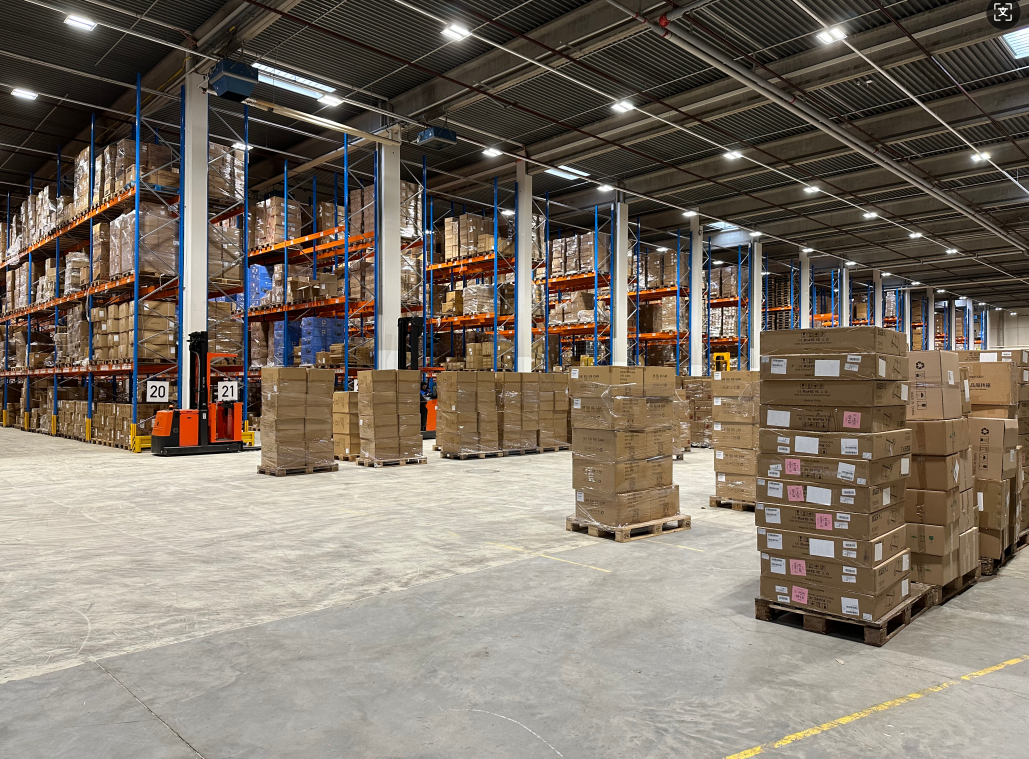
Pain Point One: Soaring Costs
United States:
· Warehousing costs increased by 25% between 2024 and 2025.
· Labor costs have risen significantly, with the federal minimum wage of USD 7.25 effectively replaced in many states by rates ranging from USD 12 to 15 per hour.
· Policy window period: Potential tariff reductions may ease cost pressures to some extent.
Europe:
· Warehousing costs in key hubs such as Germany and the Netherlands have risen by 20–30%.
· Average hourly wages range from EUR 20 to 30—more than 1.5 times the U.S. level in many cases.
· Policy window period: Compliance costs, including VAT-related burdens and market entry barriers, may be indirectly lowered.

Pain Point Two: Efficiency Bottlenecks
· Traditional warehouses: 50–100 orders processed per worker per day.
· Automated warehouses: 300–500 orders processed per worker per day.
· However, automation requires heavy upfront investment, with a single facility costing RMB 5–10 million—often beyond the reach of small and mid-sized operators.
Pain Point Three: Rising Experience Expectations
· Customer expectations: Delivery times have shortened from 5–7 days to 3–5 days, with leading players achieving 2–3 days.
· The reality gap: Approximately 80% of overseas warehouses lack real-time tracking systems, and average successful delivery rates remain at 85–90%.
Challenges of Differentiation in the U.S. Market
Challenge One: The Dilemma Between FBA and Self-Operated Warehousing
FBA Advantages: traffic support, with conversion rates improving by 20–30%, two-day delivery for Prime members, integrated after-sales protection.
FBA Disadvantages: high costs, typically 1.5–2 times that of self-operated warehouses, limited operational flexibility, opaque data visibility.
Self-Operated Warehouse Advantages: lower costs, roughly 50–70% of FBA expenses, greater flexibility in operations, full control over data.
Self-Operated Warehouse Disadvantages: no built-in traffic support,slower delivery times, more complex after-sales management.
Challenge Two: Competitive Pressure from Temu and Shein
Front-End Strategy: ultra-low pricing, rapid product testing, high-frequency new product launches.
Back-End Strategy: Localized warehousing, ultra-fast delivery, flexible and responsive supply chains.
Breakthrough Direction: Avoid competing directly in the core battleground of Temu and Shein—low prices and commoditized goods. Instead, focus on niche segments characterized by higher average order value, differentiated offerings, and brand-driven positioning.
Challenges of Differentiation in the European Market
Challenge One: VAT Compliance as a Matter of Survival
· Consequences of non-compliance: goods may be detained, selling privileges suspended, and substantial fines imposed.
· Compliance complexity: operating across 27 EU member states may require VAT registration in multiple jurisdictions.
· Opportunity within the policy window: potential simplification of VAT regulations could reduce compliance costs by 20–30%.
Challenge Two: The Complexity of Last-Mile Delivery
· Significant variations in delivery timelines: Europe consists of numerous countries with different logistics systems, regulatory environments, and trucking networks. Relying on a single carrier often fails to ensure stable final-mile performance.
Platforms such as teknihall (teknihall-trucking.com) have gained recognition by addressing this fragmentation. By integrating trucking resources across Europe, such platforms help mitigate uncertainties, reduce information asymmetry, and improve cost predictability in cross-border last-mile operations.
Challenge Three: Cultural Differences in Multi-Country Operations
· German-speaking markets: rational and detail-oriented, requiring comprehensive product information.
· French-speaking markets: experience-driven, with a strong emphasis on refined visual presentation.
· English-speaking markets: pragmatic and direct, prioritizing clear value propositions.
· Southern Europe: emotionally expressive and impulse-driven, responding well to emotionally engaging content.
III. Breaking Through the Pain Points of Overseas Warehousing in the U.S. and Europe

U.S. Market: An Integrated Strategy of Scale, Technology, and Experience
Direction One: Multi-Warehouse Deployment
· Establish a tri-regional network across the West Coast (Los Angeles), East Coast (New Jersey), and the Midwest (Chicago), enabling two-day delivery coverage for 95% of the U.S. market.
· Expected impact: Reduce delivery times from 5–7 days to 3–5 days, while lowering last-mile costs by 15–20%.
Direction Two: Technology Empowerment
· Investment in intelligent systems and automation, including smart picking, real-time inventory management, automated sorting, and intelligent warehousing solutions.
· AI-driven demand forecasting to provide 1–2 weeks of advance warning, helping prevent stockouts or warehouse congestion.
· Expected impact: Improve order processing efficiency by 50–80% and reduce labor costs by 30–40%.

Direction Three: Experience Differentiation
· Tiered delivery options: Standard (5–7 days), expedited (2–3 days), and next-day express delivery.
· Value-added services: Real-time tracking, scheduled delivery appointments, proof-of-delivery confirmation, and hassle-free returns.
· Expected impact: Increase customer satisfaction from 75% to over 90%, and improve customer retention rates by 15–25%.
European Market: A Three-Dimensional Breakthrough Through Platformization, Localization, and Collaboration

Direction One: Platform-Based Integration
· Stronger bargaining power: Platforms such as teknihall integrate trucking resources across Europe, reducing last-mile costs by 20–35%.
· Operational stability: Access to alternative carriers enables rapid switching when disruptions occur.
· Greater transparency: Real-time pricing, shipment tracking, exception alerts, and data visualization enhance visibility and control.
· Expected impact: Last-mile costs reduced by 20–35%, delivery efficiency improved by 30–40%, complaint rates reduced by more than 50%
Direction Two: Deep Localization
· Focus on core markets: Germany (Europe’s largest market), the United Kingdom (English-speaking environment), and France (a design-driven consumer market).
· Localized operations: Adaptation across language, payment systems, VAT compliance, and marketing strategies.
· Localized supply chain: Establish warehouses in Germany, the UK, and France to achieve 3–4 day delivery coverage.
Direction Three: Supply Chain Collaboration
· System integration: Align warehousing, last-mile delivery, customer service, and financial systems to ensure seamless information flow.
· Data-driven optimization: Use analytics to improve end-to-end supply chain performance.
· Risk management: Diversify suppliers, secure insurance coverage, and implement structured contingency protocols.
IV. Future Trends of Different Types of Overseas Warehouses

1. Pure Storage Type
· Positioning: Provides only storage services, lacking core competitiveness.
· Pressure: Unless there are advantages in service, price, and last-mile delivery, it is easily replaceable and will be forced to transform or exit in the future.
2. Service-Oriented Type
· Positioning: Provides integrated services including storage, last-mile delivery, and after-sales support.
· Pressure: Many medium-sized warehouses adopt this model, but to become a giant, better differentiated services are required.
3. Platform-Oriented Type
· Positioning: Integrates upstream and downstream resources to provide end-to-end solutions.
· Pressure: There is an opportunity to become a giant, but given the current fragmentation of European countries and the proliferation of channels, there is still a long way to go to achieve standardization.
Conclusion
By 2026, driven by the international backdrop, the overseas warehouse market in Europe and America is undergoing a profound transformation and reshuffling.
Survival of the fittest is the iron law of market competition. Regardless of your warehouse size, if you want to go further, while optimizing service experience, cooperating with platforms is a good choice, which both reduces costs and improves efficiency, enhancing core competitiveness from another angle.
For small companies, while large warehouses are trying every means to strengthen their last-mile channels, if you are still hesitating whether to trust platforms, you may truly miss the opportunity.
The window of opportunity is fleeting. Opportunities wait for no one. If you want to be a winner, you must act now.