The Golden 48-Hour Rule of European Logistics
I. The Black Hole of Peak Season Rejections: 12% Order Loss and Cost Out of Control
Data from Amazon sellers' backend in 2024 showed that the peak FBA warehouse rejection rate hit 12% during peak seasons. Rejection causes were concentrated on compliance issues such as warehouse overstock (e.g., appointment cancellation rates exceeded 75% at warehouses like Germany DTM2 and Poland WRO5), incorrect pallet specifications, and mismatched label information. Take a home furnishing seller from Dongguan as an example: 2,000 sets of Christmas lighting it shipped to German FBA warehouses were rejected due to overweight pallets. Failure to re-warehouse the goods within 48 hours would result in a slow-moving inventory loss of €120,000.
Industry Pain Point BreakdownTime Cost: The traditional process of returning goods to the factory for reshipment takes 15-30 days, causing missed sales windows;
Hidden Expenses: Stranded goods incur storage fees, secondary logistics costs and losses from discounted clearance sales;
Compliance Threshold: The EU’s pallet standards are stringent (e.g., dimensional tolerance ≤ 0.5cm, EPAL certification requirements), making it easy for small and medium-sized sellers to fall into pitfalls.

II. Belgian Overseas Warehouse in Europe: The "Intelligent Hub" of Europe’s Emergency Logistics Network
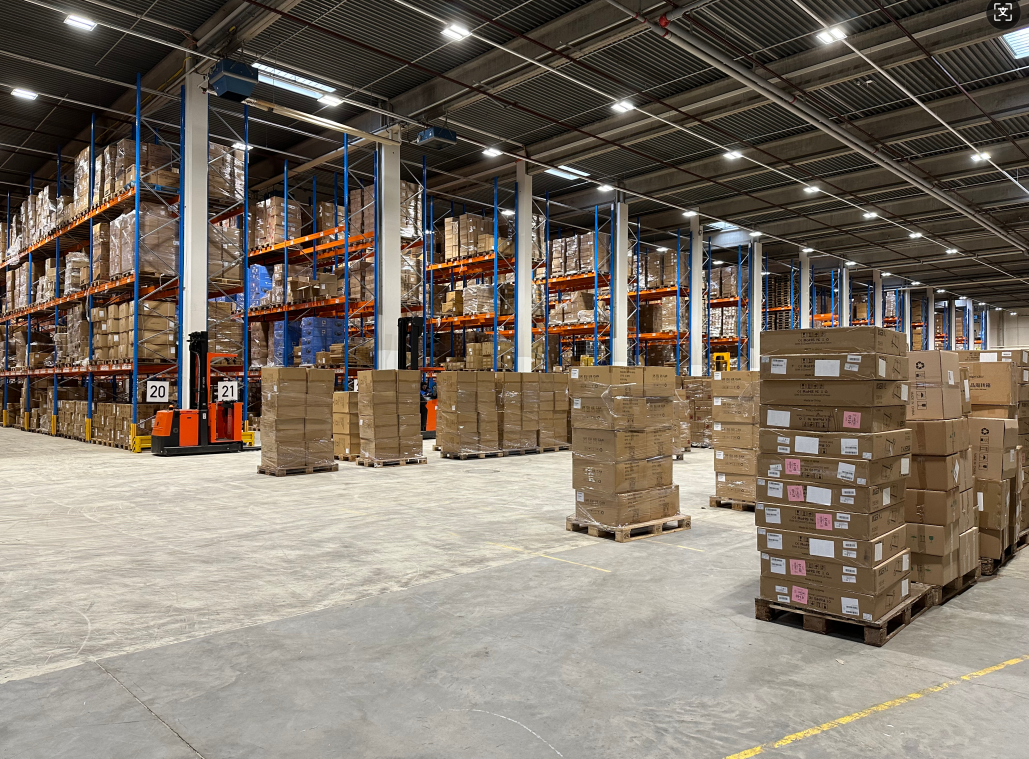
As a core node of European logistics, the Belgian overseas warehouse market has attracted significant attention. Among them, Pangu DeHao’s Belgian Warehouse has become a warehouse rescue line for cross-border sellers by virtue of three core capabilities:
Location Leverage
Covering core markets such as Germany, France and the Netherlands within a 2-hour truck drive, enabling emergency inventory allocation;
Intelligent Sorting & Distribution System
Integrated with an AI quality inspection module, it automatically identifies label errors and dimensional deviations, and completes relabeling and repalletizing within 2 hours;
Compliance Pre-review Mechanism
A professional team rebuilds pallets in accordance with FBA standards (stacking height ≤ 1.8m, single pallet weight ≤ 500kg), avoiding the risk of secondary rejection.
Practical Drill: Emergency Process Activated by the above Dongguan Seller After Triggering a Rejection Alert
19:00: The system synchronizes FBA rejection information and generates a restocking instruction;
20:30: Goods are transferred to the Belgian Warehouse, and the AI identifies the pallet overweight issue;22:00: Pallets are split into compliant ones and FNSKU labels are updated;
8:00 the next day: Access to Pangu’s German cartage & delivery network is secured, with warehousing and shelving completed within 48 hours.
III. Pangu DeHao Cartage & Delivery Network: A Flexible Capacity Pool Building the "Logistics Safety Net"
Once the goods are reorganized to meet compliance standards, the flexible scheduling capability of Pangu DeHao’s European Cartage & Delivery Platform becomes the decisive factor for success:
Pan-European Coverage Density
Integrating multiple certified fleets including Raben and DB Schenker, with a 7/24 domestic customer service response to support ultra-fast services;
Special Scenario Adaptation
Providing truck models equipped with tail lift platforms to solve the "last meter" unloading challenge for large-sized goods;
Optimal Cost Solution
The less-than-truckload (LTL) consolidation model cuts the cost per shipment by 40%. In this case, the cartage & delivery expenditure accounted for only 3% of the recovered losses (€3,600).
Technology-Enabled Highlights
Real-time Capacity Scheduling: Pangu’s cartage & delivery team can dynamically match idle capacity via the in-system European capacity resource dashboard;
Real-time Route Quotation: After sellers input cargo volume, weight, dimensions and category, the platform generates real-time quotations for corresponding routes;
Dynamic Shipment Tracking: Full logistics trajectory traceable from the overseas warehouse all the way to customer sign-off.
IV. Long-term Defense: Building the Golden Triangle of "FBA + Pangu DeHao Warehouse & Distribution"
To systematically reduce losses from warehouse rejections, sellers are advised to implement the following strategies:
Dual Warehouse Synergy Layout
Allocate 80% of inventory to FBA and pre-position 20% in Pangu DeHao’s Polish and German warehouses, with dynamic allocation based on sales data;
Compliance Infrastructure Pre-deployment
Adopt EPAL-certified pallets and shockproof stretch film, and mitigate risks through the platform’s Warehouse Inbound Pre-inspection service;
Data Cockpit
Access the platform’s WMS system to monitor FBA storage capacity and in-transit goods in real time, which automatically triggers the restocking process in the event of a rejection.
Conclusion: A Paradigm Shift from Passive Loss Mitigation to Proactive Defense
When the potential loss of €120,000 was reduced to a freight cost of just €3,600, the case of the Dongguan seller attests to the practical value of Pangu DeHao’s integrated warehouse and distribution solution. With the Belgian warehouse as the hub and the European truck delivery network as the network, it builds a flexible system that enables immediate response to rejections and uninterrupted supply amid stockouts. In 2025, against the backdrop of the growing compliance and digitalization of European logistics, partnering with players with full-chain controllability will become the core competitive edge for cross-border enterprises to combat uncertainty.
(Note: All data is sourced from Amazon Seller Central and practical cases on the Pangu DeHao platform.)